
Coffee With the Coven: Interviews With Women in Horror—Laura Elliott
What makes us monstrous?
Who decides?
How can monstrosity and abjection be transformed into power and understanding?
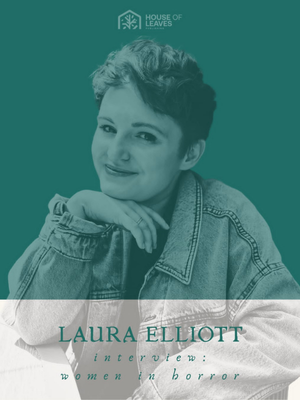
The versatility of the abject form in exploring such questions within these facets of society, particularly intersections of marginalised identities and how power is wielded against the restrictions of patriarchy, is a central theme in the work of disabled writer and journalist Laura Elliott.
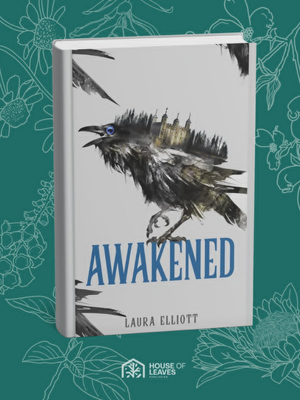
Originally from Scunthorpe in the United Kingdom, Laura’s work has been published by The Guardian, ByLine Times, Boudicca Press, Monstrous Regiment, Hachette Kids, and others. Her debut novel, Awakened, is an incisive commentary on capitalist society, medical ethics, and exploitation, seamlessly woven into a dystopian tale in which science has stolen sleep and awakened a world of horror. Published by Angry Robot Books in 2025, the book was long-listed for a BSFA Award and described by the New York Times as an “impressive debut worth losing sleep over.”
Her chapter in Weird Sisters: Covenant, titled “Monstrous Women: The Horror of Desire, Disability and the Aging Woman,” dissects the patriarchal horror and fear rooted in cultural attitudes toward aging and disability, entreating us to free the witch from this abled, patriarchal gaze by looking at her—and ourselves—in a different way.
In the inaugural edition of a special series interviewing women in horror, Coffee With the Coven, Jessica Rose chats with Laura all about her haunting Weird Sisters chapter and how its themes tie into her wider research interests; the journey she embarked upon to publish her first novel; and her experience navigating independent publishing as a disabled writer. Fellow Weird Sisters will also be very interested in what she’s working on currently…

“Monstrous Women: The Horror of Desire, Disability and the Aging Woman”
Why was it important for you to write about the connection between witches and disability, and how does this relate to the other themes in your Weird Sisters chapter?
I think that as a disabled writer of horror, I’m always fascinated by the ways that disability is depicted in the genre. I sometimes feel as though I have to defend my love of horror because, if we’re being honest, historically it hasn’t always offered “good” representation for disabled characters. But for me that’s what makes it so fascinating to study, and I’m particularly interested in disability as it pertains to depictions of “acceptable” or “aspirational” womanhood, and how even feminist figures like witches can fall prey to patriarchal notions of beauty, power, and the inherent masculinisation of the “perfect” body—which is traditionally the healthy, male body.
Why do you think witches are often depicted as monstrous in terms of their physical image and how does this correlate to disability stigmas?
The witch has become a subject of feminist iconography in recent decades, so much so that it’s sometimes difficult to see her as anything else, but we have to remember that this is a recent reclamation by women fuelled by modern-day feminism, and not the traditional interpretation of the witch. In the history of horror and folklore, it’s precisely because witches are challenges to the patriarchal order that they’re intended to be monstrous to the audience, so as not to be too greatly sympathised with.
One of the simplest ways to draw a barrier between female viewers and the “monster” they may otherwise find common cause with, is to have that monster be crude, ugly, deformed, or disabled. We all live in a society that sees disability as negative, and ugliness or disfigurement as a particular failure for a woman. While a woman may find a beautiful witch who wields her own power from the fringes of society to be aspirational, few women would find themselves empathising so strongly with the hunch-backed and disabled crone, because these aren’t things we’re taught to desire or even to accept as natural.
The monstrous witch is designed to repel. To ensure that the stigma against disability operates in such a way that it distances women from the witch we may otherwise recognise ourselves in. But the disgust for the disabled woman is still, in itself, a patriarchal imperative, and that’s why I find these depictions so interesting to examine.
How do disabled figures challenge patriarchal norms in the films you explore in your chapter, especially regarding the witch?
Disability challenges abled patriarchy because it draws attention to the fragility of not just the human body but human relations and societal support systems as well. Patriarchal structures rely on women as caregivers to support the nuclear family but also to save money on welfare systems at a local and national level by disproportionately being the ones to provide unpaid care for disabled family members. The hidden labour of women supports the health and social care systems, and so a disabled woman who can’t perform the caregiving role is ultimately abject and monstrous in the eyes of a patriarchal society that relies on her invisibilised work to function.
Within witchcraft narratives, disability complicates a purely empowered reading of the witch by revealing that certain witches are still disenfranchised despite their perceived feminist power. The aged, disabled witch is coded as monstrous precisely because she deviates from acceptable womanhood as it relates to her caregiving role and the societal mandate for beauty; however, certain representations seek to challenge the idea that these witches must be destroyed.
Relic, in particular, doesn’t fall into the accepted narrative of the destruction of the disabled witch. Instead, the narrative overcomes the “horror” of her existence by saving her from dying alone. In the final moments of the film, instead of being defeated by force she’s offered care, and it’s this quiet acceptance of the need for mutual support that restores power to both the caregiver and the cared-for, while ending the pattern of violence.
How would you like to see disability portrayed in the media, specifically in the horror genre? What filmic depictions do you consider to be the most important?
I think I’m less interested in “perfect” disability representation than I am in complex stories. While the witch as a feminist figure interests me, I’m easily bored by the beautiful witch triumphing while the disabled / disfigured witch is always defeated. While disfigurement and disability as a shorthand for immorality is dull and cliched, I still think disabled people should be allowed to be complicated villains and antagonists; it’s all down to how these characters are constructed, and I’d like to see horror continue to move beyond cheap stereotypes into something that challenges the viewer to consider those stereotypes more deeply.
I consider Relic an important example of thoughtful horror about disability, but there are a lot of incidentally-disabled characters across the spectrum of horror that I also enjoy, from the silly to the sublime. Ash from Evil Dead, for example, loses a hand and then decides that a chainsaw attachment is a great replacement to wave around when dealing with the undead. Disability rep doesn’t have to be stuffy and serious—it can be ridiculous and fun as well!
“What makes us monstrous? Who decides? How can monstrosity and abjection be transformed into power and understanding?”
What draws you to abject horror? If you had to share the most important aspect of this study, what would it be?
I’m drawn to the abject because, in my opinion, abjection is where both threat and the potential for power arises. If monstrosity occurs at the borders of self and society, then the monsters created there are endlessly adaptable and mutable, and their positions as both oppressor and oppressed are there to be constantly reconfigured and reconsidered by viewers, readers, and society at large.
Consequently, horror that’s written by marginalised creators will always fascinate me, because it recasts the role of the monster as a challenge to the dominant society as well as a creation of it. What makes us monstrous? Who decides? How can monstrosity and abjection be transformed into power and understanding? Where does the true site of horror lie? Should the monster, in fact, succeed? Who wins, and who loses, if they do?
These are questions that preoccupy me, and the versatility of the abject form in exploring these facets of society is what I really love.
What, or who, has inspired your work, particularly your debut novel Awakened? How do its themes relate to your wider work?
I’m not sure that inspired is the right word, but Awakened was definitely influenced by the long history of women writing back against the structures of medical misogyny, and the myth of the Lone and Benevolent Man of Science who ministers to the Sick and Hysterical Woman. Frankenstein is of course a cultural touchstone, as well as The Yellow Wallpaper, but I also read a lot of non-fiction accounts on the institutionalisation of women in the Victorian era and earlier, and historical writings on women’s disability and “hysteria.”
Can you talk us through the process of getting your novel published—what advice would you give someone embarking on this path?
I came to publishing via a rather unusual route, in that I began as a journalist before becoming disabled myself. While I was housebound, I published a few short stories in various anthologies, and I’d built a small community on Twitter which included other writers and editors in the independent publishing space. One of those editors was Simon Spanton at Angry Robot Books, and he’d seen that I was writing a novel about disability and sleepless monsters, and said that he’d like to read it if I ever finished.
When it was eventually finished, I submitted to a few agents and then had an existential crisis, in that no-one else had read this book apart from me and I had no idea if I was barking up the wrong tree entirely, so I asked Simon if he’d like to read it just to tell me whether or not it was publishable. He agreed and asked whether I’d like him to read it as a friend or an editor, and I chose friend. A few weeks later he emailed me back saying that he was putting his editor hat back on and would really like to take Awakened to an acquisitions meeting at Angry Robot, and things happened very quickly after that!
It’s one of those things that sounds like an overnight success but was really the cultivation of a community, and growing a body of work over many, many years.
“So much of this business is about community, and you’ll have a much better time if you see other writers not as your competition but as your colleagues and your friends.”
What has been your experience of navigating (independent) publishing as a disabled woman? What challenges have you encountered, and what changes would you like to see implemented?
I’ve been very lucky with my publisher, my agent, and the team around me. Simon had followed my work on disability for a few years by the time he signed me, and so Angry Robot was very aware of my physical limitations when I signed on the dotted line for the publishing deal. At every stage of the process, I’ve been given a lot of leeway in terms of deadlines, and there’s been a great focus on accessibility, which has been incredibly refreshing in an industry that’s often very fast-paced and quite closed-off, despite its claims to equality.
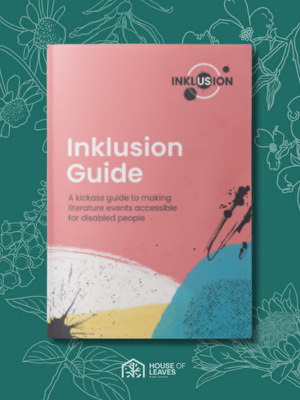
I would like to see this implemented more widely across the publishing landscape, as well as more hybrid options for events in the industry at large. A great resource I'd recommend is The Inklusion Guide, which summarises best-practice accessibility across hybrid, online, and in-person literature events.
What do you want your work to reflect? What do you want readers to take away from your writing?
I think this changes project-by-project, but Awakened is particularly concerned with the tension between the social and medical models of disability with post-viral illness, and the way that disabled people who are unable to produce Capital are discarded by the world we live in.
I’d like readers to reflect on the dystopian elements of the way our late-stage Capitalist societies force us into disability, and then abandon us when that disability occurs. The way that technology, which could be a force for good, is often weaponised against us. And the way that medicine, historically and in the current day, is often in service to Capital and not entirely to its patients.
If you could share one piece of advice with fellow and aspiring writers, especially in regard to independent publishing, what would it be?
So much of this business is about community, and you’ll have a much better time if you see other writers not as your competition but as your colleagues and your friends.
And finally, what are you currently working on, and what would be your dream project? Let’s manifest it!
At the moment I’m almost finished with my second novel, Strega, which is aptly enough a literary folk horror that not only features a witch—of sorts—but also follows a cast of teenage girls who reclaim their power by aligning with the “monster” of the story.
In terms of my dream project, I’m a life-long video gamer and one day I’d love to write my own small-town, story-driven folk horror video game. I already have the cast of characters and the story very clearly in my mind, but sadly my technical ability is nil and I’ve never learnt to code, so I’m not sure I’ll ever find myself in a situation where someone will give me free rein to write the narrative for a game that others would have to build!
Still, we live in hope. Maybe a few book deals down the line I might be able to get away with it…
Laura lives in Sheffield with her husband, James, their rescue pup, Benoit "Benni" Barks, and two feline overseers, Catticus Finch and Hercule Purrot.
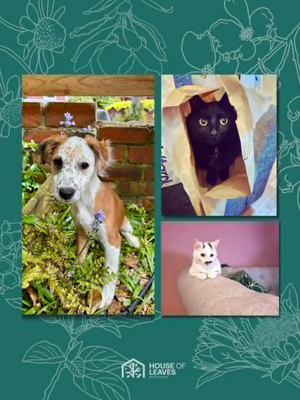
Follow Laura’s advice about community by following her on X and Instagram to keep up with her work (and for regular photos of her fur family…).
Don’t sleep on Awakened… get your copy here (only 800 copies of the first printing were left last time I checked)!
You can read Laura’s incredible chapter, “Monstrous Women: The Horror of Desire, Disability and the Aging Woman,” along with eight other enchanting pieces on witches in film and television in Weird Sisters: Covenant, the first entry of a trilogy.
Learn more about the project (and its exclusive perks) and secure your pre-order here.